
Cystic Acne Treatment in Frisco, TX | Deep Acne Care
Cystic Acne Treatment in Frisco, TX
Many people describe cystic acne as extremely irritating because of the way it behaves compared to other kinds of acne, such as blackheads or whiteheads. These deep, inflamed lesions form below the skin, where pressure, swelling, and inflammation can build for days or even weeks. Many people searching for cystic acne treatment in Frisco, TX, are experiencing painful bumps that cause sleep problems, are tender to touch, and will usually leave hyperpigmentation or scarring after the lesion has healed.
All patients with cystic acne lesions need to be treated appropriately by developing an individualized treatment plan. This is determined based on the depth of the cyst, the amount of inflammation present, the frequency of recurrence, the likelihood of scarring, and the current health of the skin barrier.
Cystic Acne Treatment in Frisco, TX, for Deep Breakouts That Need Careful Planning
When oil, dead skin cells, dirt, and inflammation build up in the hair follicles deeply enough, pressure builds beneath the surface of the skin, causing a cyst. Since the inflammation extends deeper into tissues, deep cystic acne heals more slowly and with a higher risk for scarring than superficial acne.
In evaluating patients seeking cystic acne treatment in Frisco, TX, providers must take into account much more than the number of lesions. The distribution pattern of breakouts, the frequency of recurrence, the amount of tenderness present, and how well the breakouts heal are also considered.
Cystic Acne Treatment in Frisco, TX, for Bumps That Stay Deep and Painful
An obvious sign that you have cystic acne is the presence of a lump that is deep under the skin, hard to the touch, and does not come to a head. Patients will often refer to these types of lesions as being “knots” beneath the skin. This typically refers to the fact that the inflammation associated with cystic acne has developed much deeper than a typical pimple or pustule.
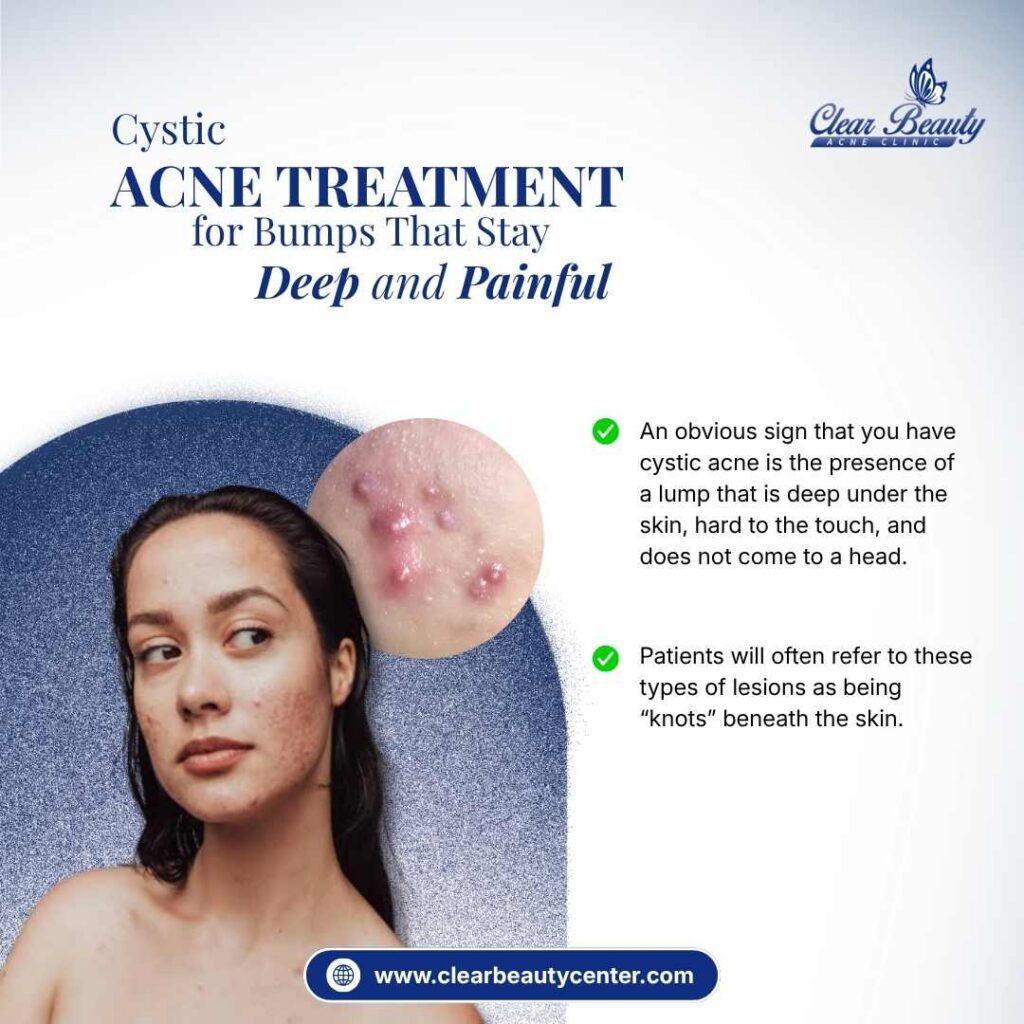
Clinically, pain provides more information to the provider than the physical size of the cyst. Therefore, it’s possible for a small cyst to produce a large amount of pain due to the pressure of the swelling in the dermis on the surrounding nerves. Patients often say that cystic acne causes them more pain than one would expect based on how it looks.
Deep Acne That Does Not Come to a Head
Many deep breakouts never develop a visible white center. This is because both the clogged pore and the inflammation stay below the skin rather than pushing up. As there’s no opening on the surface, pressure builds within the lesion and can last for a long time before it is resolved.
Therefore, treating these types of lesions is different from treating surface lesions. Trying to extract or press on them will make the inflammation worse and will result in an increased chance of scarring, as rupturing the hair follicle at greater depths will cause the inflammatory material to leak into the areas surrounding the original spot.
Cystic Acne Marks, Scars, and Why Early Planning Matters
Long-term texture scarring is linked with cystic acne due to the impact of deep inflammation on the collagen-supporting structure. When collagen is broken down, rolling or boxcar scars can form, and these scars often become more noticeable only after active acne improves.
Early therapy is of utmost importance because preventing a scar is much easier than correcting it. An assessment is made by providers not only for current lesions, but for the presence of continued inflammation in scar-prone areas such as cheeks and temples in order to determine how aggressive the treatment will be.
Cystic Acne That Keeps Coming Back in the Same Spot
Recurring cysts in the same exact location usually indicate a chronic, damaged follicle. Many patients think each lesion is a completely new breakout, but repeated inflammation can weaken a pore so it repeatedly traps oil and keratin. This creates a cycle of recurrence in the same spot.
At an acne clinic in Frisco, TX, the recurrence pattern gives important diagnostic insight. For example, multiple cysts on the chin may suggest hormone-related cysts, while on the cheeks, they may be linked to friction, hygiene, or environmental triggers. Being able to correctly detect the behavior patterns will help in long-term prevention planning.
Painful Jawline, Chin, and Cheek Breakouts
Acne under the chin and along the jawline may be due to a combination of hormonal changes, stress, or both. Increased activity of hormones called androgens leads to sebaceous glands producing too much oil, leading to conditions that can block the follicle deep down. This type of acne is typically found in adults suffering from persistent inflammatory acne.
Breakouts on the cheek may have both external and internal triggers. Things like your phone touching your cheek when you use it, the strap of a helmet touching your cheek, your cheek coming into contact with your pillow case, your cheek coming into contact with sports equipment, and frequently touching your face can all contribute to ongoing irritation of the follicles on the cheek and can heavily impact your success with treatment.
Why Cystic Acne Can Feel Worse Before It Looks Worse
Cystic acne typically becomes painful before exhibiting visible signs of swelling. This is because the inflammatory process starts to happen below the surface of the skin before the redness and swelling become apparent.
In many instances, patients will feel soreness around the area 1-2 days before cystic acne actually develops.
If inflamed acne treatment in Frisco, TX, is started during the early inflammation stages, the overall severity of the cyst may decrease. However, if you wait until the cyst is fully formed, your healing time will typically increase.
When Cystic Acne Needs More Than a Stronger Acne Product
Most people assume that when they’ve had persistent acne for a long period of time, they simply need to use more powerful products, like benzoyl peroxide, retinoids, scrubs, and acids, in order to clear their skin.
Unfortunately, the excessive use of aggressive topical agents often causes further skin irritation, prolonging the problem by causing even more inflammation overall (not to mention the usual side effects such as excessive dryness, irritation, and barrier damage).
Thus, before starting an aggressive acne regimen, providers must review each patient’s entire skin care routine.
For example, if a person uses a glycolic-based exfoliating cleanser, exfoliating pads, retinol, and spot treatment containing salicylic acid, he or she could be creating further irritation than improving the acne itself.
Acne Clinic in Frisco, TX, for Cystic, Scarring Risk, and Ongoing Follow-Up
Generally speaking, severe types of acne require ongoing monitoring as opposed to a one-time treatment. As inflammation decreases, skin tolerance changes, healing patterns become clearer, and scar risk becomes easier to evaluate. Consequently, ongoing monitoring is essential for successful acne management.
In addition to monitoring the number of breakouts, an acne specialist in Frisco, TX, will keep track of the rate at which your lesions are healing or the depth at which they have formed, along with the health of your skin’s barrier, any pigment changes to the skin (as may occur with post-inflammatory erythema), or any change in the way you are tolerating treatment. Tracking these factors will, over time, identify patterns that will assist the specialist in delivering better long-term management of your acne.
Clear Beauty Acne Clinic for Careful Cystic Acne Treatment in Frisco, TX
At Clear Beauty Acne Clinic in Frisco, TX, we will conduct a thorough and detailed clinical assessment of each patient before recommending any treatment for cystic acne. We usually review the patient’s acne history, perform a thorough skin analysis, and evaluate the products being used.
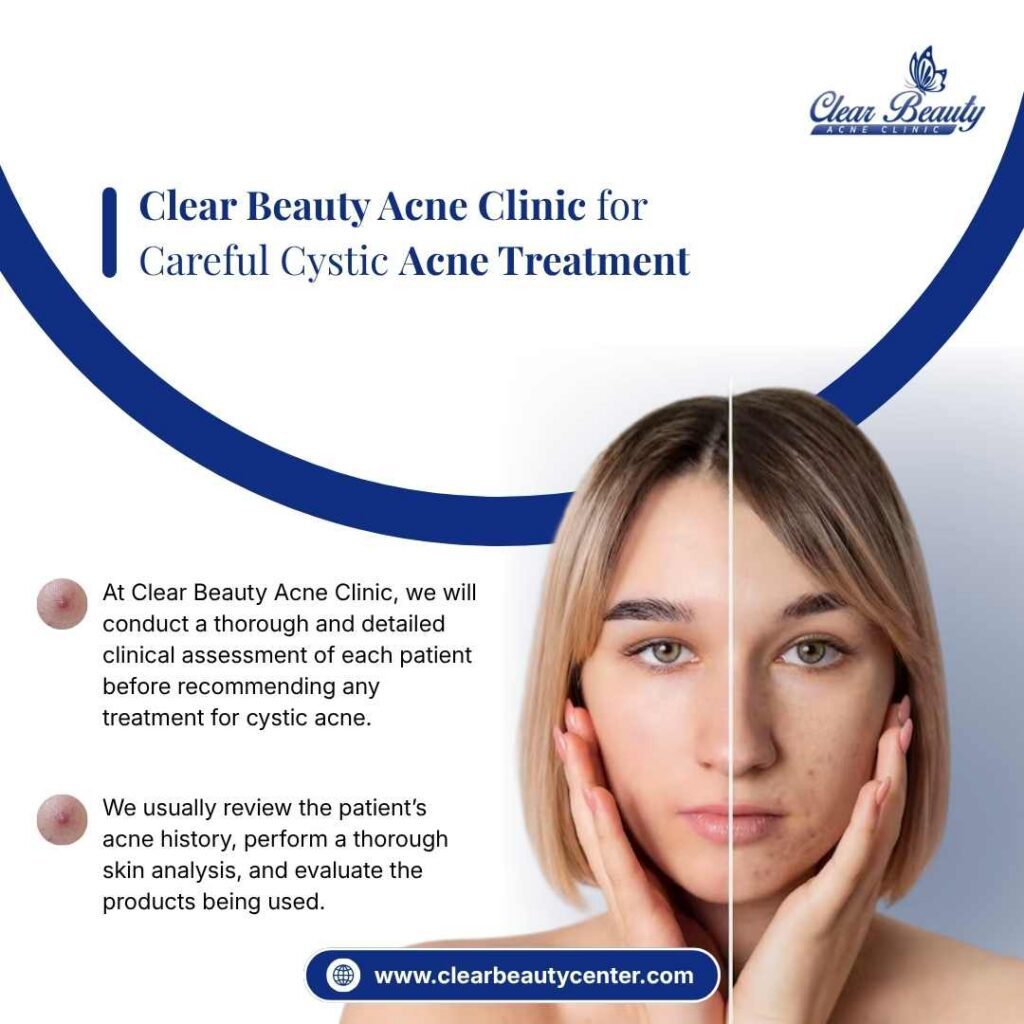
From these evaluations, we can determine what’s causing the breakouts, identify any factors that may increase the potential risks of scarring if left untreated, and determine how reactive or inflamed the patient’s skin barrier has become from previous treatments.
Schedule an acne consultation session for evaluations for careful cystic acne planning.
FAQs
What does cystic acne look and feel like?
Cystic acne typically manifests as deep, swollen, painful cysts under the skin, which can last for days or even weeks.
Why does cystic acne hurt under the skin?
Cysts are usually painful because of the deep inflammation and swelling that press against and irritate the surrounding nerves and tissue. Essentially, the pain caused by the pressure from the cyst can occur before any redness develops on the outer surface.
Why does cystic acne keep coming back in the same place?
Repeated acne breakouts in one area mean that the hair follicles in this area have been damaged by previous inflammation. Hormones, friction from clothes, and blockage from acne products, dirt and oil, also contribute to the formation of cysts in a given area on the skin.
Can cystic acne be extracted?
Cystic acne typically cannot be extracted for safety reasons because there’s no opening on the surface of the cyst. Trying to extract cysts increases the risk of inflammation and scarring.
What should I do when a cystic pimple will not come to a head?
If you have a cyst that doesn’t come to the surface, don’t squeeze or pick at the rash. Gently caring for your skin and seeing a professional as soon as possible is the safest option.
Can cystic leave scars?
One of the concerns with cystic acne is that it has a tendency to cause scarring as a result of the inflammation affecting the deeper layers of collagen-supportive skin tissue.
When should I see an acne specialist for cystic acne treatment in Frisco, TX?
An acne specialist in Frisco, TX, should be consulted for cystic acne if your breakouts are painful, happen repeatedly, take a long time to subside, and leave you with scarring.